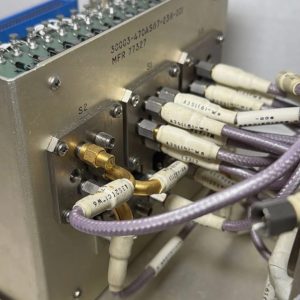
The Aviation Switching Module – NSN 4920-01-250-2696 (AS-IS / Untested) combines recognizable aviation hardware, an identifiable National Stock Number, potential electrical-control functionality, and commercial value for informed specialist buyers.
An Aircraft Switching Module and Aerospace Switching Module should be treated as specialized equipment rather than universal components that can be connected to any aircraft electrical system.
Every Aircraft Power Switching Module or Aircraft Signal Switching Module should be assessed individually because connectors, voltage, current, control logic, and system compatibility can vary significantly.
The Aviation Control Module may be associated with a larger Aircraft Electronic Switching System, while the Aerospace Switching Unit and Aircraft Electrical Module should be inspected before connection or installation.
Identifying the Aerospace Switching Unit
The seller should provide clear photographs of every label, marking, connector, switch, control, mounting point, enclosure surface, and included accessory.
The exact manufacturer, model number, electrical specifications, switching functions, and associated equipment should be confirmed through reliable technical references whenever available.
Buying an Untested Aviation Module
The condition description should be understood as a limitation rather than a suggestion that the unit is probably operational.
A current-limited and controlled test setup may be appropriate when selected by qualified personnel.
Evaluating Aircraft Switching Functions
The product page should avoid assigning a cockpit, power-distribution, test-set, or mission-system function without evidence.
A detailed visual inventory supports informed evaluation of the Aircraft Switching Module.
Aerospace Switching Module Construction
Careful exterior evaluation can reveal evidence of previous use or damage before the unit is opened.
Proper connector protection preserves the Aerospace Switching Module for future testing or restoration.
Aircraft Electrical Hardware Review
A qualified technician should determine whether additional internal inspection is justified.
Loose wires, nonstandard components, replaced relays, cut conductors, or evidence of field repair should be recorded.
Aviation Electrical Control Module Functions
The module may interact with relays, switches, indicators, sensors, power sources, test connections, or other control equipment.
Control labels and switch legends can provide useful Aviation Control Module clues, but they should not be used as the only source of technical identification.
Aircraft Power Switching Module Considerations
An Aircraft Power Switching Module may connect, disconnect, select, or manage compatible electrical power circuits when designed for that function.
Power-input and output terminals should be checked for looseness, heat discoloration, corrosion, damaged insulation, and unsuitable previous repair.
Aviation Control Unit Inspection
Its internal design may include electromechanical components, solid-state devices, wiring assemblies, circuit protection, or specialized connectors.
Detailed records support the long-term value of the Aerospace Electrical Control Unit.
Aircraft Signal Switching Module Uses
Signal circuits can be sensitive to grounding, shielding, contact resistance, connector condition, and electromagnetic interference.
Original cable assemblies may add significant value when included.
Professional Aviation Module Evaluation
Clear intended use helps establish realistic expectations for an AS-IS Aviation Control Module.
Every marking should be recorded before purchase or installation planning.
Commercial Value of an Untested Switching Unit
An Aircraft Switching Unit offered AS-IS may appeal to aviation workshops, military-equipment collectors, technical schools, restoration specialists, and organizations maintaining legacy support equipment.
Training use should avoid destructive modifications when the component has collectible or restoration value.
Choosing an Aerospace Power Distribution Module
Power distribution equipment may use switches, relays, terminals, bus structures, circuit protection, and control interfaces depending on design.
Mounting points should be inspected because secure installation can affect grounding, cooling, vibration resistance, and connector alignment.
Maintaining Legacy Aviation Control Equipment
The unit should be photographed before and after any preservation work.
Testing results should identify exactly which switches, contacts, indicators, or circuits were evaluated.
Aviation Power Control Module Uses
Broad market keywords can support discovery while the technical description remains precise.
Technicians should inspect for capacitors, transformers, relays, damaged insulation, or hazardous residues before opening or testing the unit.
Electronic Switching Module Applications
System diagrams can help identify required inputs, outputs, grounds, control logic, and companion components.
The module should not be blamed until related wiring and equipment are considered where the original system is available.
Long-Term Storage of Aircraft Electronics
The Aerospace Switching Unit should be stored in a clean, dry, stable environment protected from moisture, dust, chemicals, impact, pests, and extreme temperature changes.
Original packaging should receive additional protection rather than being used as the only shipping container.
Buying AS-IS Aviation Electronics
An Aircraft Electrical Module should be purchased according to exact identity, intended use, condition, completeness, technical support, testing requirements, and available documentation.
Transparent disclosure strengthens trust in an Aircraft Electrical Module transaction.
NSN 4920-01-250-2696 Buying Checklist
The seller should disclose corrosion, missing parts, broken controls, damaged connectors, previous repairs, opened seals, burned areas, contamination, and signs of impact.
- Request photographs of all labels, switches, controls, connectors, mounting points, enclosure surfaces, seals, fasteners, and included accessories.
- Inspect switches, knobs, indicators, connectors, pins, wiring, and terminals for damage, looseness, contamination, overheating, or unauthorized repair.
- Require packaging that protects connectors, switches, labels, enclosure corners, mounting brackets, controls, and loose accessories from movement and impact.
Evaluating an Untested Electrical Module
A qualified technician may use controlled and current-limited equipment appropriate to the module design.
Partial operation should not be presented as complete certification, calibration, or airworthiness.
Restoring the Aerospace Switching Module
Professional restoration can improve the usability and value of the Aerospace Switching Module.
Every repair should record the date, technician, fault found, parts replaced, measurements, testing performed, and remaining limitations.
Aviation Switching Module Conclusion
The Aviation Switching Module – NSN 4920-01-250-2696 (AS-IS / Untested) can provide restoration, research, parts, training, collection, or professional evaluation value when its identity and condition are understood clearly.
Careful technical and commercial evaluation can reduce equipment damage, incompatible purchases, missing-accessory costs, testing hazards, and restoration delays.
Whether buyers need an Aircraft Power Switching Module, Aerospace Electrical Control Unit, Aircraft Signal Switching Module, or Aviation Control Module, electrical specifications should be verified before testing.
With responsible purchasing, NSN research, connector protection, current-limited evaluation, and documented restoration, the component can remain a useful aviation asset.